Showing posts with label Salahaddin. Show all posts

Monday, November 09, 2009

October 09 Deaths Continue Up And Down Pattern

Since April 2009 monthly death counts for Iraq have fluctuated up and down. October was no different as it was higher than the previous month. Iraq’s ministries for example, reported 410 deaths in October, compared to 203 in September and 456 in August. They also recorded 1,275 wounded in October, and 711 in September.

Around half of last month’s casualties came from large bombings, most notably the October 25 Baghdad bombings, which killed 155 and wounded 520. In total, there were 22 mass casualty bombings in October resulting in 241 deaths and 887 wounded. In September, there were only 13 leading to 70 deaths and 263 wounded.

Baghdad remains the most violent city in Iraq. There were 53 attacks and incidents last month with 201 deaths and 703 wounded. That was followed by Mosul in Ninewa province with 66 attacks/incidents, 60 deaths and 82 wounded. After those two, Anbar was third with 29 attacks/incidents, 56 deaths, and 175 wounded, and Diyala was fourth with 21 attacks/incidents, 20 deaths, and 46 wounded. Southern Iraq remains the second least violent area with only 21 attacks/incidents overall with 9 deaths and 93 wounded. Babil is still troubled with insurgent and militia activity however. Special Groups are still active in the south as well carrying out six attacks on U.S. bases and patrols. Kurdistan was the least violent area of the country.

Overall, deaths are still down to their lowest levels since the 2003 invasion. According to Iraq’s ministries there were an average of 276.5 deaths in the first six months of 2009 compared to 385.0 in the last six months of 2008. The major reason is that many Sunnis, including insurgents, have decided to get involved in the political process, resulting in a steady decline in the number of attacks across the country since the January 2009 provincial elections.

Iraqi Deaths


Brookings Institution

Iraq Body Count

icasualties

Iraqi Ministries

Associated Press

2008


July

500

584

419

465

510

Aug.

450

592

311

431

475

Sep.

400

535

366

440

503

Oct.

350

528

288

318

446

Nov.

270

473

317

340

360

Dec.

350

522

320

316

393

2009


Jan.

270

276

187

191

242

Feb.

230

343

202

258

288

March

260

416

278

252

335

April

340

484

347

355

371

May

240

332

188

165

225

June

320

488

367

438

447

July

220

395

240

275

309

Aug.

300

493

439

456

425

Sep.

N/A

296

158

203

238

Oct.

N/A

439

320

410

364

Averages


3rd Qtr. 2008

450.0

570.3

365.3

446.3

496.0

4th Qtr.

2008

323.3

507.6

308.3

324.6

379.6

1st Qtr.

2009

253.3

345.0

222.3

233.6

288.3

2nd Qtr. 2009

300.0

434.6

300.6

319.3

347.6

3rd Qtr. 2009

N/A

394.6

279.0

311.3

324.0

Last 6 months of 2008

386.6

539.0

336.8

385.0

447.8

First 6 months of 2009

276.6

389.8

261.0

276.5

317.5


Number of Bombings and Casualty Statistics – April to October 2009

April 2009
Bombings: 21
Deaths: 198 + 32 Iranians
Wounded: 497 + 105 Iranians + 10 Americans

May 2009
Bombings: 9
Deaths: 111
Wounded: 262

June 2009
Bombings: 14
Deaths: 174
Wounded: 517

July 2009
Bombings: 35
Deaths: 180
Wounded: 655

August 2009
Bombings: 44
Deaths: 359
Wounded: 2,252

September 2009
Bombings: 13
Deaths: 70
Wounded: 263

October 2009
Bombings: 22
Deaths: 241
Wounded: 887

Attacks and Casualties By Province October 2008

Baghdad: 53 attacks/incidents
Dead: 201
Wounded: 703

Ninewa: 77 attacks/incidents
Deaths: 75
Wounded: 129

Anbar: 29 attacks/incidents
Deaths: 56
Wounded: 175

Diyala: 21 attacks/incidents
Deaths: 20
Wounded: 46

Tamim: 22 attacks/incidents
Deaths: 9
Wounded: 14

Salahaddin: 6 attacks/incidents
Deaths: 4
Wounded: 25

Southern Iraq: 21 attacks/incidents
Babil: 6
Karbala: 6
Dhi Qar: 5
Wasit: 2
Basra: 1
Qadisiyah: 1
Deaths: 9
Wounded: 93

Special Group attacks in southern Iraq
Mortar attack on U.S. base in Dhi Qar
Rocket attack on U.S. base in Dhi Qar
IED attack on U.S. patrol in Dhi Qar
Attack on U.S. base in Basra
Rocket attack on U.S. base in Kut
2 U.S. vehicles damaged in roadside bombing in Wasit

SOURCES

Al-Anbari, Bassim, “Triple attacks kill 19 in western Iraqi city,” 10/12/09

Agence France Presse, “Iraq death toll falls by half in September: officials,” 10/1/09

Associated Press, “Police: Suicide bomber kills 11 at mosque in Iraq,” 10/16/09
- “Suicide bomb kills 6 at funeral in Iraq,” 10/6/09

Aswat al-Iraq, “2 bombs defused in Mosul,” 10/26/09
- “2 bombs found in Huweija,” 10/7/09
- “2 civilians killed in Mosul,” 10/21/09
- “2 civilians wounded by bomb explosion in Baghdad,” 10/22/09
- “2 civilians wounded in 2 separate incidents in Mosul,” 10/5/09
- “2 civilians wounded in armed attack in Baaquba,” 10/8/09
- “2 civilians wounded in Thi-Qar blasts,” 10/4/09
- “2 civilians wounded, suspect arrested in Khanaqin,” 10/23/09
- “2 cops wounded in Mosul blast,” 10/5/09
- “2 gunmen arrested in Kirkuk while planting bomb,” 10/11/09
- “2 killed in separate incidents in Mosul,” 10/3/09
- “2 missiles land on U.S. base in Kut,” 10/23/09
- “2 policemen wounded in IED blast in Jalawlaa,” 10/28/09
- “2 unknown bodies found in Mosul,” 10/20/09
- “3 civilians wounded in Babel blast,” 10/10/09
- “3 cops killed, wounded in Falluja blast,” 10/17/09
- “3 IEDs defused in Amara,” 10/28/09
- “3 killed, 5 wounded in bombing in Mosul,” 10/28/09
- “3 people injured by sticky bomb in Talafar,”10/30/09
- “3 policemen killed, officer wounded in Mosul attack,” 10/29/09
- “4 cops killed, injured in Babel,” 10/20/09
- “4 cops wounded by IED in Kirkuk,” 10/15/09
- “5 killed, wounded in Falluja blast,’ 10/5/09
- “10 civilians wounded in Babel blast,” 10/4/09
- “Basra airport comes under Katyusha attack,” 10/12/09
- “Blast in Baghdad leaves 6 injuries,” 10/28/09
- “Blast in Falluja leaves no casualties,” 10/27/09
- “Blast in Ninewa wounds cement company chief,” 10/18/09
- “Blast kills 1, wounds 9 north of Hilla,” 10/18/09
- “Blast kills 2, wounds 9 north of Hilla,” 10/18/09
- “Blast kills civilian, injures 3 northeastern Baghdad,” 10/15/09
- “Body found, suspected gunman arrested in Kirkuk,” 10/25/09
- “Body of kidnapped Christian found in Kirkuk,” 10/5/09
- “Bomb explodes in Kirkuk without casualties,” 10/29/09
- “Bomb wounds 2 in Mosul,” 10/6/09
- “Bomber killed in northern Talafar,” 10/29/09
- “Children, mother wounded in Mosul blast,” 10/12/09
- “Civilian body found in eastern Kut,” 10/21/09
- “Civilian killed in Kirkuk,” 10/21/09
- “Civilian killed in tribal clashes in Mosul,” 10/12/09
- “Civilian wounded in Baghdad armed attack,” 10/12/09
- “Civilian wounded in IED blast in Ramadi,” 10/29/09
- “Civilian wounded in IED blast near Mosul,” 10/26/09
- “Contractor gunned down in Mosul,” 10/12/09
- “Cop, civilians injured in Baghdad bombing,” 10/5/09
- “Cop killed by gunmen in Talafar,” 10/1/09
- “Cop wounded in Falluja blast,” 10/11/09
- “Death toll from Baghdad blasts up to 155,” 10/26/09
- “District chief escapes attempt on his life in Mosul,” 10/19/09
- “Guided missiles seized in Basra,” 10/26/09
- “Guard killed in crowded souk in Mosul,” 10/23/09
- “Gunmen assassinate tribal affairs office chief in Ninewa,” 10/19/09
- “Gunmen blow up house of officer in Anbar,” 10/17/09
- “Gunmen storm building in Mosul, kill two civilians,” 10/26/09
- “Gunman kidnap 2 students in Kirkuk,” 10/20/09
- “Gunman killed while trying to plant bomb,” 10/6/09
- “Gunmen kill cop south of Falluja,” 10/21/09
- “Hand grenade injures 4 in Mosul,” 10/31/09
- “IED blast in Kirkuk, no casualties reported,” 10/24/09
- “IED blast kills 2 Iraqi soldiers, wounds 4 in Kirkuk,” 10/13/09
- “IED blast kills 3, wounds 4 in eastern Baghdad,” 10/28/09
- “IED blast near Mosul leaves no casualties,” 10/3/09
- “IED blast targets MNF patrol in Kirkuk,” 10/25/09
- “IED defused in Ramadi,” 10/26/09
- “IED defused in western Mosul,” 10/12/09
- “IED explodes in Nassiriya, no casualties reported,” 10/4/09
- “IED explodes in Talafar,” 10/6/09
- “IED explodes near officer’s house in southern Kirkuk,” 10/5/09
- “IED explodes near police patrol in Kirkuk,” 10/23/09
- “IED hits U.S. convoy in Baghdad,” 10/31/09
- “IED injures 6 in central Baghdad,” 10/1/09
- “Iraq army kills gunman in Mosul,” 10/19/09
- “Iraqi forces clash with smugglers on Syrian borders,” 10/16/09
- “Iraqi soldier killed, 2 wounded in Mosul,” 10/23/09
- “Katyusha rocket lands near Iraqi military post in Diwaniya,” 10/13/09
- “Local official in Falluja assassinated,” 10/23/09
- “Mayor, sons killed, wounded in Diala bombing,” 10/12/09
- “Missile defused in Kirkuk,” 10/9/09
- “Mortars wound civilians in Baghdad,” 10/31/09
- “Police defuse 7 rockets in eastern Wassit,” 10/5/09
- “Police defuse bomb in central Falluja,” 10/12/09
- “Police kill gunman in northeastern Mosul,” 10/2/09
- “Police seize ready-to-launch rockets in Basra,” 10/20/09
- “Policeman killed, 3 civilians wounded separately in Mosul,” 10/22/09
- “Policeman, gunman killed in Mosul,” 10/22/09
- “Policeman survives IED blast near his vehicle,” 10/18/09
- “Policeman wounded in Mosul blast,” 10/13/09
- “Pre. Student kidnapped in Kirkuk,” 10/26/09
- “Real-estate office owner killed in Mosul,” 10/25/09
- “Roadside bomb exploded, another dismantled in Kirkuk,” 10/14/09
- “Rocket lands in south Kirkuk,” 10/29/09
- “Rockets, launching pads seized in Falluja,” 10/6/09
- “Rockets left minor damage at base – U.S. forces in Thi-Qar,” 10/21/09
- “Sahwa official wounded in Diala,” 10/22/09
- “Samarra sahwa official survives attempt on his life,” 10/28/09
- “Sticky bomb defused at official building in Ninewa,” 10/28/09
- “Sticky bomb kills 2 women, injures 12 persons in Babel,” 10/21/09
- “Sticky bomb kills, wounds 5 family members,” 10/7/09
- “Sticky bomb wounds 4 people in Baghdad,” 10/22/09
- “Sticky bomb wounds 5 in Mosul,” 10/31/09
- “Suicide attack leaves 16 casualties in Diala,” 10/13/09
- “Suicide bomber kills 1, wounds 9 in Tikrit,” 10/24/09
- “Suspected bomber kills policeman, guard during interrogation,” 10/31/09
- “Two blasts hit U.S. patrol in Thi-Qar,” 10/14/09
- “Two gunmen killed while planting roadside bomb in Kirkuk,” 10/17/09
- “U.S. base in Nassiriya mortared,” 10/21/09
- “U.S. forces kill civilian, arrest 4 brothers,” 10/27/09
- “U.S. vehicle damaged in explosion in Wassit,” 10/25/09
- “Umm al-Nakhl sahwa chief assassinated,” 10/28/09
- “Unidentified body of woman found west of Makhmour,” 10/24/09
- “Vendor, child killed in northern Mosul,” 10/21/09
- “Woman killed, 2 civilians wounded by police mistake fire in Mosul,” 10/16/09
- “Woman killed, kidnapped person freed in Baghdad,” 10/20/09
- “Woman’s head found in Mosul,” 10/3/09

Bernama, “Civilian Killed, 10 Injured In Bomb Attack In Baghdad Snack Restaurant,” 10/19/09

DPA, “Four killed, three injured in attacks in Mosul,” 10/21/09
- “Four killed, two injured in two separate attacks in Iraq,” 10/1/09
- “Four policemen killed in Iraq,” 10/17/09

Al-Dulaimy, Mohammed, “Round-up of Daily Violence in Iraq – Monday October 5 2009,” McClatchy Newspapers, 10/5/09
- “Round-up of Daily Violence in Iraq – Saturday October 24, 2009
- “Round-up of Daily Violence in Iraq – Sunday October 5, 2009,” McClatchy Newspapers, 10/5/09
- “Round-up of Daily Violence in Iraq – Sunday October 11, 2009,” McClatchy Newspapers, 10/11/09

Hammoudi, Laith, “Round-up of daily Violence in Iraq – Monday 26 October 2009,” McClatchy Newspapers, 10/26/09
- “Round-up of Daily Violence in Iraq – Sunday 18 October 2009,” McClatchy Newspapers, 10/18/09
- “Round-up of Daily Violence in Iraq – Thursday 20 October 2009,” McClatchy Newspapers, 10/29/09
- “Round-up of daily Violence in Iraq – Thursday 29 October 2009,” McClatchy Newspapers, 10/29/09
- “Round-up of daily Violence in Iraq – Tuesday 6 October 2009,” McClatchy Newspapers, 10/6/09
- “Round-up of Daily Violence in Iraq – Tuesday 13 October 2009,” McClatchy Newspapers, 10/13/09
- “Round-up of daily Violence in Iraq – Tuesday 18 October 2009,” McClatchy Newspapers, 10/18/09
- “Round-up of daily Violence in Iraq – Wednesday 14 October 2009,” McClatchy Newspapers, 10/14/09

Hussein, Jenan, “Round-up f daily Violence in Iraq – Tuesday 20 October 2009,” McClatchy Newspapers, 10/20/09
- “Round-up of Daily Violence in Iraq – Wednesday 28 October 2009,” McClatchy Newspapers, 10/28/09

Icasualties.org

Iraq Body Count

Issa, Sahar, “Round-up of Daily Violence in Iraq – Friday 2 October, 2009,” McClatchy Newspapers, 10/2/09
- “Round-up of Daily Violence in Iraq – Friday 9 October, 2009,” McClatchy Newspapers, 10/9/09
- “Round-up of Daily Violence in Iraq – Monday 19 October, 2009,” McClatchy Newspapers, 10/19/09
- “Round-up of Daily Violence in Iraq – Thursday 1 October, 2009,” McClatchy Newspapers, 10/1/09
- “Round-up of Daily Violence in Iraq – Thursday 8 October, 2009,” McClatchy Newspapers, 10/8/09
- “Round-up of Daily Violence in Iraq – Wednesday 7 October 2009,” McClatchy Newspapers, 10/7/09

ITN, “Clear up after Iraq minibus bombing,” 10/7/09

Karim, Ammar, “UN envoy probes Baghdad security as death toll doubles,” Agence France Presse, 11/2/09

Kimball, Jack, “Attacks kill 11, wound over 50 people,” 10/14/09

Leland, John, “Scattering of Attacks in Iraq,” New York Times, 11/1/09

McClatchy Newspapers, “Car bombs explode in Baghdad, killing at least 135 people,” 10/25/09

Multi-National Corps – Iraq, “MND-B, ISF detain five suspects after grenade attack,” 10/12/09

O’Hanlon, Michael Campbell, Jason, “Iraq Index,” 9/22/09

Press TV, “Seven killed in Baghdad mortar attack,” 10/14/09

Reuters, “FACTBOX-Security developments in Iraq, Oct 3,” 10/3/09
- “FACTBOX-Security developments in Iraq, Oct 9,” 10/9/09
- “FACTBOX-Security developments in Iraq, Oct 11,” 10/11/09
- “FACTBOX-Security developments in Iraq, Oct 12,” 10/12/09
- “FACTBOX-Security developments in Iraq, Oct 14,” 10/14/09
- “FACTBOX-Security developments in Iraq, Oct 15,” 10/15/09
- “FACTBOX-Security developments in Iraq, Oct 17,” 10/17/09
- “FACTBOX-Security developments in Iraq, Oct 18,” 10/18/09
- “FACTBOX-Security developments in Iraq, Oct 19,” 10/19/09
- “FACTBOX-Security developments in Iraq, Oct 20,” 10/20/09
- “FACTBOX-Security developments in Iraq, Oct 21,” 10/21/09
- “FACTBOX-Security developments in Iraq, Oct 26,” 10/26/09
- “FACTBOX-Security developments in Iraq, Oct 30,” 10/30/09
- “Iraq oil pipeline to Turkey sabotaged-engineer,” 10/28/09

Salaheddin, Sinan, “Roadside bomb in Baghdad targets Iraqi security forces, kills 1 soldier,” 10/15/09

Santana, Rebecca, “85,000 Iraqis killed in almost 5 years of war,” Associated Press, 10/14/09

Surk, Barbara, “Bombs kill 6 around Iraq,” Associated Press, 10/20/09
- “Half Iraqis killed in October died in one attack,” Associated Press, 11/2/09
- “Truck bomb destroys key bridge in western Iraq,” Associated Press, 10/17/09

UNN, “Iraq: Two explosion, 3 killed & 9 injured,” 10/19/09

Xinhua, “2 killed, 13 wounded in Baghdad bomb attacks,” 10/18/09
- “5 injured in fuel tanker truck bombing outside Baghdad airport,” 10/4/09
- “12 people wounded in bomb explosion in south Baghdad,” 10/21/09
- “At least one killed in suicide car bombing in Diyala,” 10/29/09
- “Bomb explosion kills 3 south of Baghdad,” 10/8/09
- “Civilian killed in Iraq’s Diyala violence,” 10/5/09
- “Insurgent killed, 6 injured in Iraq’s Diyala violence,” 10/12/09
- “Iraqi journalist killed in bomb attack in N Kirkuk,” 10/21/09
- “Iraqi parliament evacuated after bomb discovery: lawmakers,” 10/3/09
- “Seven people wounded in Iraq’s Diyala violence,” 10/22/09
- “Two policemen killed in Baghdad violence,” 10/5/09

Sunday, November 08, 2009

Mid-2009 Weekly Security Statistics For Iraq

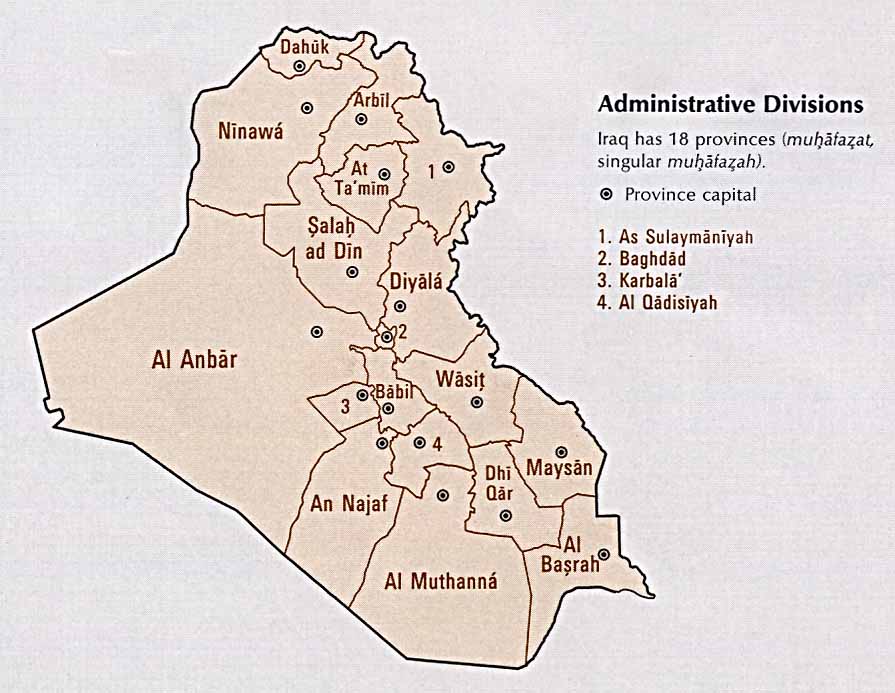
Despite the recent October 2009 Baghdad bombing, and the previous one in August, attacks in Iraq are at their lowest level since the 2003 invasion. The Special Inspector General for Iraq Reconstruction recorded drops in weekly attacks in eleven of Iraq’s eighteen provinces from May to October 2009. The three governorates in Kurdistan, Dohuk, Irbil, and Sulaymaniya had the least amount of incidents at 0.5 or less for the last six months, followed by the southern provinces of Karbala, Qadisiyah, Najaf, and Muthanna that also saw fewer than one attack per week from August to October. Babil was the one exception in that region, as it had in increase in attacks going from 3.9 in the 2nd quarter of 2009 to 5.1 in the third. Much of that is due to sticky and roadside bombs planted by a mix of Sunni and Shiite militants, and gangs.

The five most violent areas were Diyala, Tamim, Salahaddin, Ninewa, and Baghdad in that order. Out of those however, only Salahaddin saw a very small increase from the second quarter of 2009 to the third, going from 25.2 per week to 25.8. Those provinces along with Anbar however, hold roughly 70% of Iraq’s population. All remain violent because Baghdad is the seat of power, while Diyala, Tamim, Salahaddin, and Ninewa are at the center of the ethnosectarian struggle in the country.

These numbers, along with the fluctuating monthly death counts show that Iraq is a much changed place. Violence is still at unacceptable levels, but the number of attacks and casualties have seen a steady decline over the last two years. Not only that, but the nature of the conflict has drastically changed. Almost all of the incidents consist of bombings, mortar and rocket attacks, and assassinations. There are hardly any armed clashes between militants and the security forces anymore. This is due to the fact that Sunnis are attempting to join the political process, and the Shiite Special Groups and militias are hardly active anymore. This is not captured in the media, which hardly mentions Iraq anymore, and when it does, it’s almost always about violence. That creates a distorted picture of the situation there, and makes Iraq seem like it is in a perpetual state of chaos, when in fact, many there are attempting to return to their normal lives.

Weekly Average Attack Statistics In Iraq – May to October 2009

Province

May-July 09

Aug.-Oct. 09

% Change

Baghdad

74.8

63.1

-16%

Ninewa

65.5

53.1

-19%

Salahaddin

25.2

25.8

+3%

Tamim

20.9

19.8

-5%

Diyala

24.7

17.8

-28%

Anbar

14.9

9.2

-37%

Babil

3.9

5.1

+29%

Basra

5.2

4.1

-21%

Maysan

3.4

2.4

-30%

Dhi Qar

1.6

1.6

0%

Wasit

1.5

1.1

-32%

Qadisiyah

0.4

0.9

+128%

Najaf

1.2

0.4

-70%

Karbala

0.3

0.4

+14%

Muthanna

0.3

0.4

+14%

Irbil

0.2

0.4

+90%

Dohuk

0.5

0.2

-68%

Sulaymaniya

0.3

0.0

-100%


SOURCES

Aswat al-Iraq, “12 civilians wounded by roadside bomb blast in Babel,” 10/21/09
- “Sticky bomb kills 2 women, injures 12 persons in Babel,” 10/21/09

Cordesman, Anthony, "Recent Trends in the Iraq War: Maps and Graphs," Center for Strategic and International Studies, 10/1/09

Special Inspector General for Iraq Reconstruction, “Quarterly Report to the United States Congress,” 10/30/09

Thursday, November 05, 2009

Iraq's Provincial Budget Expenditures - 2009

One of the major problems with the Iraqi government is its inability to spend its budget effectively. The country’s eighteen provinces do much worse than the central government in Baghdad. The new Special Inspector General for Iraq Reconstruction’s quarterly report to Congress has the latest numbers on how Iraq’s governorates have done up to October 13, 2009.

Ninewa has spent none of its $236 million budget, probably due to the political disputes between the ruling Al-Hadbaa party and the Kurdish Ninewa Fraternal List, that are boycotting the provincial council. Anbar did the best, spending 70% of its $112 million budget. The new local government there, led by Sheikh Ahmed Abu Risha’s Awakening of Iraq party and Governor Qasim Abed al-Fahadawi, has focused upon developing Anbar and investing in its future.

As reported before, these aggregate numbers show only part of the picture. Almost all of these expenditures are going towards old projects initiated by the previous governments, before the 2009 elections when Iraq was flush with money. Almost every province, has reported a budget deficit this year as a result. Some councils have also not been good at spending their money, such as Maysan that expended 79% its money in 2008, but which went to only 41 of 241 projects. With security improving, Iraqis are increasingly calling for better services, which require that the governorates do a much better job with their finances. A top down, Soviet style management system, a paper based bureaucracy, corruption, and other factors are all reasons why the provinces have not been able to do a better job so far.

Provincial Budgets/% Expended
Anbar $112 mil/70%
Tamim $99 mil/55%
Qadisiyah $86 mil/54%
Dhi Qar $143 mil/48%
Babil $134 mil/41%
Wasit $91 mil/40%
Maysan $80 mil/37%
Baghdad $551 mil/33%
Najaf $93 mil/32%
Karbala $78 mil/29%
Muthanna $56 mil/28%
Basra $201 mil/25%
Diyala $104 mil/23%
Salahaddin $97 mil/17%
Ninewa $236 mil/0%
Kurdistan N/A/N/A

SOURCES

Dagher, Sam, “In Anbar Province, New Leadership, but Old Problems Persist,” New York Times, 9/13/09

Special Inspector General for Iraq Reconstruction, “Quarterly Report to the United States Congress,” 10/30/09

Thursday, October 08, 2009

Iraq’s 2009 Drought

Iraq is facing a drought again. Officially, it has been going on for the last two years. Unofficially the United Nations says four. The lack of rain, no government water policy, and population growth are the main causes, but Baghdad has been blaming its neighbors as well. Iran, Syria, and Turkey have all built dams that affect Iraq’s two main rivers, the Euphrates and Tigris, along with smaller tributaries. Iraq needs 500 cubic meters per second from both major rivers according to the Water Ministry, but as of August 2009 was only receiving 440 cubic meters per second from the Euphrates and 100-160 cubic meters from the Tigris. All four countries have been holding meetings over water issues, with few results.

Together these problems are having larger and larger effects upon Iraq’s agriculture, rural areas, and power supply. Iraq’s rice production has dropped from 500,000 tons per year to 250,000 tons. Wheat has declined from 3.5 million tons to 1 million tons. As a result, Iraq has become one of the largest food importers in the world, when it was self-sufficient in the 1980s. It will need to import 4 million tons of wheat alone this year, at a cost of $1.4 billion. Overall, Iraq will have to buy 80% of its food needs this year. The drought is also leading to population shifts. 3,000 people in Basra have left their homes because of rising salt levels in the land. In Ninewa, 60 out of 150 villages in the Al-Tal district are deserted in what was once the most productive wheat and barley area of the province. 90% of the land is also desert or suffering from desertification. A report by the European Water Associated warned that Iraq could become barren like Saudi Arabia if something isn’t done. Hydroelectric power production is also down. In the city of Nasiriyah in Dhi Qar province, two of four turbines have been shut down because water levels are so low.

With no government planning, little money to support farmers, minimal international aid, and a lack of cooperation so far from its neighbors, Iraq’s water situation is likely to get worse before it gets better. More rain is likely to be the only respite, otherwise it will face another year of drought, whose effects are spreading from the countryside to Iraq’s cities with migration, decreased power production, and food imports.


Farmland Affected
Affected farmland 36,919 square kilometers
Total farmland 96,706 square kilometers
% of affected farmland 38.7%
Babil, Irbil, Ninewa, Salahaddin, Tamim, – 46-56%
Dhi Qar, Diyala, Maysan – 31-45%
Baghdad, Karbala, Najaf, Qadisiyah – 26-30%
Anbar, Basra, Muthanna, Wasit – 6-25%
Sulaymaniya – 4-5%
Dohuk – 0%

SOURCES

Blua, Antoine, “Iraq Tussles With Neighbors Over Water,” Radio Free Europe/Radio Liberty, 9/13/09

Chulov, Martin, “Water shortage threatens two million people in southern Iraq,” Guardian, 8/26/09

DiPaola, Anthony and Alexander, Caroline, “Iraq Drought Cuts Harvest, Boosts Imports as Oil Cash Slips,” Bloomberg, 8/5/09

Hope, Bradley, “Iraq digs in to rebuild agricultural sector,” The National, 8/30/09

Inter-Agency Information and Analysis Unit, “The Humanitarian Situation In Iraq, Inter-Agency Fact Sheet,” United Nations Office for the Coordination of Humanitarian Affairs, August 2009

IRIN, “IRAQ: Drought hits rice, wheat staples,” 8/31/09b

Kamal, Adel, “desertification destroys ninawa villages,” Niqash, 7/17/09

Raphaeli, Dr. Nimrod, “Water Crisis in Iraq: The Growing Danger of Desertification,” The Middle East Media Institute, 7/23/09

Sly, Liz, “Iraq in throes of environmental catastrophe, experts say,” Los Angeles Times, 7/30/09

Special Inspector General for Iraq Reconstruction, “Quarterly Report and Semiannual Report to the United States Congress,” 7/30/09

Tharp, Mike, “Once world’s bread basket, Iraq now a farming basket case,” McClatchy Newspapers, 7/17/09

Williams, Timothy, “Idle Iraqi Date Farm Show Decline of Economy,” New York Times, 8/15/09

Monday, September 14, 2009

Salahaddin’s Governor Dismissed

On September 3, 2009 on a vote of 17 for, 7 against, and 3 abstaining, Salahaddin’s provincial council dismissed Governor Mutashar al-Aliwi. The council said that the governor refused to appear before them for questioning. No other reasons were provided. The governor and council have only been in office since April 2009.

The next several days saw demonstrations for and against the council’s decision. On September 4, people gathered in Samarra, and the next day in Tirkrit to let the governor know that he should step down. On September 7, the Iraqi Islamic Party organized a counter demonstration in the city of Dalouiya, and another march was held in the Ishaqi district on September 9. The Governor has said the council’s ruling is illegal, and he is going to the courts to make his case.

Aliwi is a member of the Iraqi Accordance Front, which is led by the Islamic Party. The Accordance Front tied for first place in the 2009 provincial elections. Former Prime Minister Ilyad Allawi’s Iraqi National List was the other first place winner, and they, along with other smaller parties, formed a ruling coalition with the Accordance Front. Some member of that group had to vote for Aliwi’s removal for it to be successful.

SOURCES

Aswat al-Iraq, “Demonstration in Salah el-Din against dismissal of governor,” 9/9/09
- “Demonstration in Samarra against sacking Salah el-Din’s governor,” 9/4/09
- “Demonstrators in Tikrit want governor out,” 9/5/09
- “Salah al-Din residents protest removal of governor,” 9/7/09

Tuesday, September 01, 2009

Latest Return Statistics For Iraqi Refugees/Displaced

The latest report by the United Nations High Commissioner for Refugees (UNHCR) on the number of Iraqi refugees and internally displaced that have returned is now available. Like the last report, 2009 has continued to see a number of Iraqis come back, but varying by month. In June, 2009 14,750 displaced and 3,490 refugees for a total of 18,410 Iraqis made the trip back. That compared to a total of 15,330 in May. March saw the largest number of returns this year with 26,540. Since 2005 displaced returns, 61% of the total, have far outweighed the refugees coming back, 39%. In the first six months of 2009 roughly 101,490 Iraqis have returned. That would put this year roughly on track to match last year's total of 221,260. 2004 has seen the most returns since the U.S. invasion with 291,997 making the trip. That year 193,997 were refugees coming back to see the new Iraq. In total, the UNHCR estimates that approximately 3,195,899 lost their homes, and about 1,075,986, 33.6%, have returned so far. The number of displaced and the percent that have returned is definitely incomplete because the UNHCR counts no refugees before 2006 when there were tens of thousands of them under Saddam.

Total displaced

Time

Displaced

Refugees

Total

Pre-2006

1,212,108


1,212,108

After 2006

1,695,899

1,500,000

3,195,899

Number of Returns 2003-June 2009

Time

Displaced

Refugees

Total

2003

0

55,429

55,429

2004

98,000

193,997

291,997

2005

98,000

56,155

154,155

2006

150,000

20.235

170,235

2008

195,890

25,370

221,260

Jan. 09

6,390

1,130

7,520

Feb. 09

15,810

2,970

18,780

Mar. 09

20,690

4,860

26,540

Apr. 09

11,020

3,890

14,910

May 09

10,540

2,990

15,330

Jun. 09

14,750

3,490

18,410

2009

79,200

18,970

101,490

Total

657,090

183,727

1,075,986


61%

39%

100%

The vast majority of Iraqis are going back to six of Iraq's eighteen provinces, Baghdad, Diyala, Najaf, Karbala, and Babil. Baghdad has been at the center of the fighting since the U.S. invasion, so it should be no surprise then that the capital has seen the most displaced, and the most returns. 54% of the displaced and 52% of refugees have gone back to that province. The International Organization for Migration (IOM), the premier aid group working with Iraq's displaced, has extensively surveyed this community and found that 26.6% were forced from their property in Baghdad, 20.6% did so because of the fighting, 20.1% because of direct threats to their life, 15.8% fled the general violence, and 15.7% left out of fear. Those figures are signs of the death and destruction that were wrought in the capital, especially after the 2006 Amarra bombing when the Shiites began ethnically cleansing Sunnis. Overall, the major reason why the displaced have come back is the improved security according to the IOM, followed by a mix of better security and difficulties in their current locals. Those are probably the same reasons for refugees, although far fewer of them, 12.2% of the total, have come back so far.

Returns by Province Jan.-June 2009

Sulaymaniya

140

0%

Muthanna

180

0%

Irbil

190

0%

Salahaddin

440

0%

Dhi Qar

440

0%

Dohuk

510

1%

Qadisiyah

510

1%

Maysan

510

1%

Anbar

520

1%

Tamim

740

1%

Basra

1,250

1%

Wasit

1,130

1%

Karbala

1,350

1%

Babil

1,680

2%

Najaf

2,170

2%

Ninewa

2,920

3%

Diyala

31,770

31%

Baghdad

55,040

54%

TOTAL

101,490

100%

Refugee Returns by Province Jan.-June 2009

Ninewa

20

0%

Anbar

60

0%

Sulaymaniya

140

1%

Irbil

160

1%

Salahaddin

160

1%

Muthanna

180

1%

Dhi Qar

430

2%

Maysan

440

2%

Wasit

450

2%

Dohuk

510

2%

Qadisiyah

510

2%

Basra

680

3%

Tamim

690

3%

Babil

1,030

5%

Karbala

1,320

6%

Diyala

1,660

7%

Najaf

2,170

10%

Baghdad

11,680

52%

TOTAL

22,290

100%

Displaced Returns by Province Jan.-June 2009

Dohuk

0

0%

Qadisiyah

0

0%

Muthanna

0

0%

Najaf

0

0%

Sulaymaniya

0

0%

Dhi Qar

10

0%

Irbil

30

0%

Karbala

30

0%

Tamim

50

0%

Maysan

70

0%

Salahaddin

280

0%

Anbar

460

1%

Basra

570

1%

Babil

650

1%

Wasit

680

1%

Ninewa

2,900

4%

Diyala

30,110

38%

Baghdad

43,360

55%

TOTAL

79,200

100%

The government of Prime Minister Nouri al-Maliki is still encouraging the return of Iraq's displaced. The UNHCR does not think it's time, and the latest Pentagon report to Congress on Iraq said Baghdad has no serious plan to assist the process. The new plan is to try to get them to come back to violent areas in Abu Ghraib outside of Baghdad and Diyala. The authorities have plans to move in 3,000 mostly Shiite families into Abu Ghraib, and to begin evictions of squatters in Diyala. The governor of that province also hopes that families will come back, and has set up six committees in various regions of Diyala to look into damages and pay compensation to returning families. The displaced are worried about insurgent attacks.

Baghdad is trying to close the refugee file this year in an attempt to improve the image of the country, and to help Maliki in the 2010 parliamentary elections. Already, in February 2009 the Ministry of Displacement and Migration ordered a stop to registering new displaced claiming that most families have gone back to their homes. This is an important development because not only is the claim not true, but no Iraqis can receive government aid without registering. The authorities have also promised rewards for those that go back to Baghdad, but very few have received any payments.

The process of return has begun, but the majority of Iraq's refugees are still without their homes. The displaced are coming back in much larger numbers than refugees, mostly because of the improved security situation in the country. The major concern is what they will find when they come home. The government has promised help, but it has not come through in many cases. Prime Minister Maliki seems more concerned about the reports on returns to improve his standing, than actually bettering conditions for when families come back. International organizations have only been able to assist a small fraction of this community, which means many are likely to have to fend for themselves whether they decide to go back or stay where they are.

SOURCES


Abdullah, Muhammed, “displaced fear new al-qaeda violence,” Niqash, 6/24/09

Alsumaria, “UNHCR: Iraq not prepared for refugees return,” 6/3/09

Dagher, Sam, “Iraq’s Government Orders Barriers Removed,” New York Times, 8/6/09

Department of Defense, “Measuring Stability and Security in Iraq,” June 2009

International Organization for Migration, “Baghdad Governorate Profile July 2009 IOM IDP and Returnee Assessment,” July 2009
- “IOM Monitoring And Needs Assessments Assessment of Iraqi Return, May 2009,” May 2009

Reilly, Corinne, “Prospects are dismal for returning Iraqi refugees,” McClatchy Nespapers, 5/22/09

UNHCR, “Monthly Statistical Update on Return – June 2009,” 8/3/09
 
Clicky Web Analytics