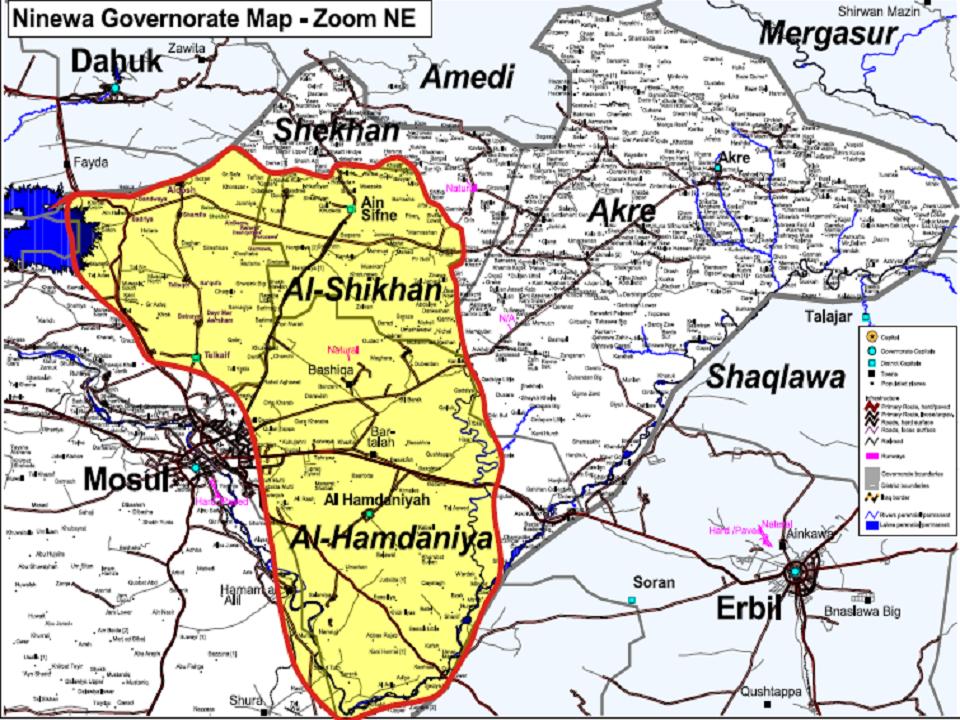
Mosul remains the second most violent city in Iraq after Baghdad. Almost everyday there are reports of drive by shootings, assassinations, or bombings. Still, there has been a slight decline in casualties since 2007, and a change in the nature of the fighting there.
The problems in Mosul began in 2004. Immediately after the U.S. invasion in 2003 the 101st Airborne Division under the command of General David Petraeus was able to pacify the city by using strong security measures, funding reconstruction projects, and getting all the major parties in the area to join the local council. When his troops left, the city was turned over to Iraqis who were not up to the job. This vacuum allowed insurgents to set up shop in 2004. Mosul became an important way station for Baathists and Al Qaeda in Syria to transfer money, supplies, and foreign fighters into Iraq. By 2005 Al Qaeda was largely in control of the western half of the city, and security deteriorated as a result.
The U.S. responded by asking the Kurdish peshmerga to move into Mosul to help with security. They took up residence in the largely Kurdish western half of the city, while Kurdish army units were deployed in the surrounding areas of Ninewa province. This facilitated the Kurdistan Democratic Party (KDP) taking over the local administration, and after the 2005 elections, they came to control the provincial council as well due to the Sunni Arab boycott. This created ethnic tensions between Arabs and Kurds, and more violence.
By 2008 Mosul had become the last urban bastion of the Iraqi insurgency. During the Surge in 2007 hundreds of militants were forced north to escape the increase in U.S. forces, and moved to Mosul. The ethnic divide there proved a fertile environment, as the insurgents increasingly portrayed themselves as the protectors of the Arabs against the Kurds. Security statistics show the changed environment. In the last three months of 2007 attacks and casualties were actually decreasing. In October 2007 there were an average of 1.51 attacks per day, resulting in 2.87 deaths and 5.83 wounded, compared to just 0.96 attacks per day, 1.58 deaths and 1.25 wounded by December. That averaged out to 1.26 security incidents per day, 2.52 deaths, and 3.73 wounded for the last three months of 2007. By the first half of 2008 that increased to 1.89 security incidents, 2.90 deaths, and 6.92 wounded.
The presence of so many insurgents in Mosul led to several Iraqi and U.S. offensives, with few results. Beginning in February 2008 U.S. forces began setting up combat outposts throughout the city, and erecting blast walls to try to control the movement of insurgents, as Iraqi forces created a Ninewa Operations Command after Prime Minister Nouri al-Maliki promised a “decisive battle” against Al Qaeda in the city in January. Deaths only decreased marginally, while the number of wounded increased dramatically over the next two months. They went from 3.34 deaths per day in February 2008 to 2.76 by April, while the number of wounded went from 2.75 to 7.60 during that same period. The problem was that rather than fighting, the militants instead chose to hide amongst the population, and adopted hit-and-run attacks.
Frustrated, in May Prime Minister Maliki announced Operation Lion’s Roar/Mother of Two Springs, but by August he admitted that it was a failure. Casualties actually increased in the two months after the offensive was launched going from 2.12 deaths per day, and 1.51 wounded in May to 3.58 deaths and 4.48 wounded by July. Following attacks on Christians in the city in October, U.S. and Iraqi forces launched Operation Mother of Two Springs II, and then Operation New Hope in February 2009. In October Operation Ninewa Wall was begun, which is almost exclusively Iraqi. Maliki also increasingly played up tensions with the Kurds, to try to rally the Sunni population of Mosul behind him to some success.
Casualties finally took a noticeable drop beginning in November 2008, but the security operations were not the cause. Rather it was the changing political situation in Mosul and Ninewa overall. In 2008 the al-Hadbaa party was formed to run in the 2009 provincial elections. The party was a coalition of Mosul elites, tribal leaders, and independent Kurds. Most important for the security situation, many Baathists and militants came to support the party as well. At the same time, the nationalist and Baathist factions of the insurgency were able to rest control of Mosul from Al Qaeda who had been losing ground in Iraq since the Anbar tribes turned on them beginning in 2005. These groups in turn, decided to try the political route after they boycotted the 2005 elections. The pending U.S. withdrawal was also a factor as many Sunni Arabs were afraid of greater Shiite domination after the Americans left, so they wanted to try to get positions in the government before that happened. Al-Hadbaa leaders were able to broker a cease-fire with the insurgents as a result, and the party ended up winning control of Ninewa in January 2009. Since then they have been able to forge a marriage of convenience with Maliki as both support a strong central government, and want the Kurdish peshmerga out of Mosul and Ninewa in general.
All of these factors led to a marked change in attacks in Mosul. Before armed clashes and shoot-outs were common in the city, along with all the bombings. Beginning in late 2008 through 2009 however, most attacks were drive by shootings, assassinations, house invasions, and still the bombs. The number of deaths went from 2.63 per day in the second half of 2008 to 1.97 in the first half of 2009, while the average number wounded dropped from 5.48 to 4.49 over the same period. From September to October the number of wounded also saw a noticeable drop.
Even with all of these changes Mosul remains a very dangerous place. Al-Hadbaa’s victory has increased tensions with the Kurdish Fraternal List that are boycotting the provincial council. That on-going ethnic divide provides a continued rationale for violence by some. In October 2009 Mosul still saw 66 attacks, 60 deaths, and 82 wounded. Until the problems between Arabs and Kurds are settled there, it will remain a largely war-torn city, unable to experience the slow return to normality that the rest of the country is beginning to experience. Monthly Casualties In Mosul – Oct. 2007 to Oct. 2009
| Attacks/
Incidents | Avg. # Of
Attacks/
Incidents | Deaths | Avg. #
Of
Deaths | Wounded | Avg. # Of
Wounded |
2007 |
|
|
|
|
|
|
Oct. | 47 | 1.51 | 89 + 2
Americans | 2.87 | 181 + 2
Americans | 5.83 |
Nov. | 39 | 1.30 | 94 + 1
American | 3.13 | 124 + 1
American | 4.13 |
Dec. | 30 | 0.96 | 49 + 3
Americans | 1.58 | 39+ | 1.25 |
2008 |
|
|
|
|
|
|
Jan. | 58 | 1.87 | 107 + 6
Americans | 3.45 | 385 + 1
American | 12.41 |
Feb. | 56 | 1.93 | 97 + 1
American | 3.34 | 80 | 2.75 |
March | 64 | 2.06 | 86 | 2.77 | 267 | 8.61 |
April | 67 | 2.23 | 83 | 2.76 | 228 | 7.60 |
May | 42 | 1.35 | 66 | 2.12 | 47 + 3
Americans | 1.51 |
June | 58 | 1.93 | 89 | 2.96 | 253 | 8.43 |
July | 83 | 2.67 | 111 | 3.58 | 139 | 4.48 |
Aug. | 67 | 2.16 | 59 | 1.90 | 113 + 1
American | 3.64 |
Sep. | 80 | 2.66 | 82 | 2.73 | 140+ | 4.66 |
Oct. | 92 | 2.96 | 112 | 3.61 | 188 | 6.06 |
Nov. | 65 | 2.16 | 53 | 1.76 | 249 | 8.30 |
Dec. | 65 | 2.09 | 68 | 2.19 | 181 | 5.83 |
2009 |
|
|
|
|
|
|
Jan. | 52 | 1.67 | 56 | 1.80 | 56 | 1.80 |
Feb. | 81 | 2.89 | 58 | 2.00 | 111 | 3.96 |
March | 86 | 2.77 | 69 | 2.22 | 169 | 5.45 |
April | 79 | 2.63 | 53 | 1.76 | 191 | 6.36 |
May | 83 | 3.06 | 64 | 2.06 | 164 | 4.70 |
June | 73 | 2.43 | 58 | 1.93 | 123 | 4.10 |
July | 73 | 2.35 | 79 | 2.54 | 169 | 5.45 |
Aug. | 77 | 2.48 | 102 | 3.29 | 171 | 5.51 |
Sep. | 72 | 2.40 | 65 | 2.16 | 60 | 2.00 |
Oct. | 66 | 2.12 | 60 | 1.93 | 82 | 2.64 |
Avgs. |
|
|
|
|
|
|
4th Qtr
2007 | 38.66/
month | 1.26/day | 77.33/
month | 2.52/
day | 114.66/
month | 3.73/day |
1st Half 2008 | 57.5/
month | 1.89/day | 88.00/
month | 2.90/
day | 210.00/
month | 6.92/day |
2nd Half 2008 | 75.33/
month | 2.45/day | 80.83/
month | 2.63/
day | 168.33/
month | 5.48/day |
1st Half 2009 | 75.66/
month | 2.50/day | 59.66/
month | 1.97/
day | 135.66/
month | 4.49/day |
SOURCES
ABC News, "Iraqi woman and child killed by US fire," 5/11/08
Abouzeid, Rania, "In Mosul, Iraq's Insurgency Refuses to Be Tamed," Time, 3/18/09
Agence France Presse, "Death toll from bombing in Iraq's Mosul rises to 13," 6/3/08
Associated Press, "Al-Qaida in Iraq front group warns it will retaliate vs. US-Iraqi crackdown," 5/27/08
- "Female bomber kills 3 near bus stop in Iraq," USA Today, 3/19/08
- "Iraq: explosion in apartment kills at least 7, wounds 70," 1/23/08
- "Iraqi police: 18 killed in clashes with al-Qaeda," USA Today, 11/10/07
- "Police: Female suicide bomber kills 3 in Iraq," 2/17/08
Aswat al-Iraq, "2 bombs defused in Mosul," 10/26/09
- "2 civilians killed in Mosul," 10/21/09
- "2 civilians wounded in 2 separate incidents in Mosul," 10/5/09
- "2 cops wounded in Mosul blast," 10/5/09
- "2 killed in separate incidents in Mosul," 10/3/09
- "2 unknown bodies found in Mosul," 10/20/09
- "3 killed, 5 wounded in bombing in Mosul," 10/28/09
- "3 policemen killed, officer wounded in Mosul attack," 10/29/09
- "Blast in Ninewa wounds cement company chief," 10/18/09
- "Bomb wounds 2 in Mosul," 10/6/09
- "Children, mother wounded in Mosul blast," 10/12/09
- "Civilian killed in tribal clashes in Mosul," 10/12/09
- "Civilian wounded in IED blast near Mosul," 10/26/09
- "Contractor gunned down in Mosul," 10/12/09
- "District chief escapes attempt on his life in Mosul," 10/19/09
- "Guard killed in crowded souk in Mosul," 10/23/09
- "Gunmen assassinate tribal affairs office chief in Ninewa," 10/19/09
- "Gunmen storm building in Mosul, kill two civilians," 10/26/09
- "Hand grenade injures 4 in Mosul," 10/31/09
- "IED defused in western Mosul," 10/12/09
- "Iraq army kills gunman in Mosul," 10/19/09
- "Iraqi soldier killed, 2 wounded in Mosul," 10/23/09
- "Police kill gunman in northeastern Mosul," 10/2/09
- "Policeman killed, 3 civilians wounded separately in Mosul," 10/22/09
- "Policeman, gunman killed in Mosul," 10/22/09
- "Policeman survives IED blast near his vehicle," 10/18/09
- "Policeman wounded in Mosul blast," 10/13/09
- "Real-estate office owner killed in Mosul," 10/25/09
- "Sticky bomb defused at official building in Ninewa," 10/28/09
- "Sticky bomb kills, wounds 5 family members," 10/7/09
- "Sticky bomb wounds 5 in Mosul," 10/31/09
- "U.S. forces kill civilian, arrest 4 brothers," 10/27/09
- "Vendor, child killed in northern Mosul," 10/21/09
- "Woman killed, 2 civilians wounded by police mistake fire in Mosul," 10/16/09
- "Woman's head found in Mosul," 10/3/09
Brown, Drewn, "U.S. troops setting down roots in Mosul," Stars and Stripes, 2/23/08
CNN, "Bombings kill 11 in northern Ira," 7/7/08
- "Iraq to host Iran leader for first time since nations warred," 1/24/08
Dagher, Sam, "Fractures in Iraq City as Kurds and Baghdad Vie," New York Times, 10/28/08
Dimov, Marina, "Three members of same family murdered in northern Iraq," Visit Bulgaria, 9/12/08
DPA, "Al-Qaeda suspects, tribal policemen, TV presenter killed in Iraq," 6/17/08
- "At least 10 killed, 15 injured in attacks in Iraq," 2/25/08
- "At least 12 killed in Iraq violence," 3/11/08
- "At least 31 killed in Iraq violence, 100 wounded – 3rd Update," 12/25/07
- "At least 59 killed, 76 wounded in Iraqi violence (1st Lead)," 4/15/08
- "At least five killed, three wounded in Iraqi violence – Summary," 2/3/08
- "Christians, churches attacked in Iraq during celebration," 1/7/08
- "Female students kidnapped, US soldier dies in Iraq," 7/6/08
- "Four Iraqi soldiers killed in clashes in northern Iraq (Extra)," 5/7/08
- "Four killed, three injured in attacks in Mosul," 10/21/09
- "Governor of Iraq's Nineveh escapes assassination attempt – Update," 6/7/08
- "Iraq's Islamic Party leader assassinated in Mosul," 8/7/08
- "Nine killed, nine wounded across Iraq (Roundup)," 10/31/07
- "Plane engines, explosives, and another grave found in Iraq – Summary," 3/9/08
- "Policeman, soldier killed in two incidents in Iraq (Extra)," 8/14/08
- "Three killed, 13 injured in blasts in northern Iraq (2nd Lead)," 4/23/08
- "US troops kill nine suspected al-Qaeda members in Iraq," 2/18/08
Al Dulaimy, Mohammed, "Round-up of Daily Violence in Iraq – Monday 11 February 2008," McClatchy Newspapers, 2/11/08
- "Round-up of Daily Violence in Iraq – Monday 12 May 2008," McClatchy Newspapers, 5/12/08
- "Round-up of Daily Violence in Iraq – Monday 24 May 2008," McClatchy Newspapers, 5/24/08
- "Round-up of Daily Violence in Iraq – Monday October 5 2009," McClatchy Newspapers, 10/5/09
- "Round-up of Daily Violence in Iraq – Saturday October 24, 2009
- "Round-up of Daily Violence in Iraq – Sunday 4 May 2008," McClatchy Newspapers, 5/4/08
- "Round-up of Daily Violence in Iraq – Sunday 23 December 2007," McClatchy Newspapers, 12/23/07
- "Round-up of Daily Violence in Iraq – Tuesday 26 February 2008," McClatchy Newspapers, 2/26/08
- "Round-up of Daily Violence in Iraq – Wednesday 7 May 2008," McClatchy Newspapers, 5/7/08
- "Round-up of Daily Violence in Iraq – Wednesday 10 September 2008," McClatchy Newspapers, 9/10/08
Freeman, Sholnn, "At Least 35 Die As Bombers Hit Wedding Convoy," Washington Post, 5/2/08 - "U.S. Deaths in Iraq War Reach 4,000; Green Zone Is Shelled," Washington Post, 3/24/08
Hamilton, Eric, "The Fight for Mosul," Institute for the Study of War, 4/29/08
Hammoudi, Laith, "Round-up of Daily Violence in Iraq – Monday 8 September 2008," McClatchy Newspapers, 9/8/08
- "Round-up of Daily Violence in Iraq – Monday 26 October 2009," McClatchy Newspapers, 10/26/09
- "Round-up of Daily Violence in Iraq – Thursday 4 September 2008," McClatchy Newspapers, 9/4/08
- "Round-up of Daily Violence in Iraq – Thursday 20 October 2009," McClatchy Newspapers, 10/29/09
- "Round-up of Daily Violence in Iraq – Tuesday 13 October 2009," McClatchy Newspapers, 10/13/09
- "Round-up of Daily Violence in Iraq – Tuesday 22 April 2008," McClatchy Newspapers, 4/22/08
- "Round-up of Daily Violence in Iraq – Tuesday 29 April 2008," McClatchy Newspapers, 4/29/08
- "Round-up of Daily Violence in Iraq – Wednesday 5 March 2008," McClatchy Newspapers, 3/5/08
- "Round-up of Daily Violence in Iraq – Wednesday 13 August 2008," McClatchy Newspapers, 8/13/08
- "Round-up of Daily Violence in Iraq – Wednesday 14 October 2009," McClatchy Newspapers, 10/14/09
- "Round-up of Daily Violence in Iraq – Wednesday 27 August 2008," McClatchy Newspapers, 8/27/08
- "Round-up of Daily Violence in Iraq – Wednesday 27 February 2008," McClatchy Newspapers, 2/27/08
Holden, Michael, "U.S. and Iraqi forces begin al Qaeda action in Mosul," 2/11/08
Hussein, Jenan, "Round-up of Daily Violence in Iraq – Wednesday 28 October 2009," McClatchy Newspapers, 10/28/09
International Crisis Group, "Iraq's New Battlefront: The Struggle Over Ninewa," 9/28/09
Iraq Today, April 2008
- August 2008
- December 2007
- February 2008
- March 2008
- January 2008
- July 2008
- June 2008
- May 2008
- November 2007
- October 2007
- September 2008
Issa, Sahar, "Round-up of Daily Violence in Iraq – Friday 5 September 2008," McClatchy Newspapers, 9/5/08
- "Round-up of Daily Violence in Iraq – Friday 14 March 2008," McClatchy Newspapers, 3/14/08
- "Round-up of Daily Violence in Iraq – Friday 22 August 2008," McClatchy Newspapers, 8/22/08
- "Round-up of Daily Violence in Iraq – Monday 19 October 2009," McClatchy Newspapers, 10/19/09
- "Round-up of Daily Violence in Iraq – Sunday 20 July 2008," McClatchy Newspapers, 7/20/08
- "Round-up of Daily Violence in Iraq – Thursday 1 October 2009," McClatchy Newspapers, 10/1/09
- "Round-up of Daily Violence in Iraq – Thursday 7 February 2008," McClatchy Newspapers, 2/7/08
- "Round-up of Daily Violence in Iraq – Thursday 10 April 2008," McClatchy Newspapers, 4/10/08
- "Round-up of Daily Violence in Iraq – Thursday 17 January 2008," McClatchy Newspapers, 1/17/08
- "Round-up of Daily Violence in Iraq – Thursday 18 September 2008," McClatchy Newspapers, 9/18/08
- "Round-up of Daily Violence in Iraq – Thursday 20 March 2008," McClatchy Newspapers, 3/20/08
- "Round-up of Daily Violence in Iraq – Thursday 24 July 2008," McClatchy Newspapers, 7/24/08
- "Round-up of Daily Violence in Iraq – Wednesday 7 October 2009," McClatchy Newspapers, 10/7/09
Kadhim, Hussein, "Round-up of Daily Violence in Iraq – Monday 9 June 2008," McClatchy Newspapers, 6/9/08
- "Round-up of Daily Violence in Iraq – Monday 14 January 2008," McClatchy Newspapers, 1/14/08
- "Round-up of Daily Violence in Iraq – Monday 29 September 2008," McClatchy Newspapers, 9/29/08
- "Round-up of Daily Violence in Iraq – Thursday 3 October 2007," McClatchy Newspapers, 10/3/07
- "Round-up of Daily Violence in Iraq – Thursday 6 March 2008," McClatchy Newspapers, 3/6/08
- "Round-up of Daily Violence in Iraq – Thursday 11 October 2007," McClatchy Newspapers, 10/11/07
- "Round-up of Daily Violence in Iraq – Tuesday 01 April 2008," McClatchy Newspapers, 4/1/08
- "Round-up of Daily Violence in Iraq – Tuesday 06 May 2008," McClatchy Newspapers, 5/6/08
- "Round-up of Daily Violence in Iraq – Wednesday 23 January 2008," McClatchy Newspapers, 1/23/08
- "Round-up of Daily Violence in Iraq – Wednesday 24 September 2008," McClatchy Newspapers, 9/24/08
KUNA, "Attack in Mosul leads to injury of 17 people," 6/22/08
Mohammed, Mujahid, "Five arrested after Iraq TV crew murder," Agence France Presse, 9/14/08
Multi-National Corps – Iraq, "MNC-I Soldier attacked during military operations (Mosul)," 11/13/07
- "MND-N Soldiers attacked in Ninevah Province (Mosul)," 2/20/08
- "MND-North Soldiers attacked by small-arms fire (Mosul," 1/26/07
- "Task Force Iron Soldiers attacked in Mosul," 10/31/07
Nagpal, Sahil, "Governor of Iraq's Nineveh province survives assassination attempt," DPA, 6/7/08
Oppel, Richard, "Truck Bomb Kills Up to 16 Iraqis in Mosul," 10/17/07
Partlow, Joshua and Tyson, Ann Scott, "Five U.S. Soldiers Are Killed When Convoy Is Hit in Mosul," Washington Post, 1/29/08
PBS Frontline, "Interview Maj. Gen. David Petraeus," Beyond Baghdad, 2/12/04
Press TV, "Car bomb kills woman in Baghdad," 11/8/07
Reuters, "Bombs hit northern Iraq, forces expect more," 8/13/08
- "Car bomb kills 18 people in Iraqi city," 6/26/08
- "FACTBOX-Security developments in Iraq, April 1," 4/1/08
- "FACTBOX-Security developments in Iraq, April 2," 4/2/08
- "FACTBOX-Security developments in Iraq, April 4," 4/4/08
- "FACTBOX-Security developments in Iraq, April 6," 4/6/08
- "FACTBOX-Security developments in Iraq, April 11," 4/11/08
- "FACTBOX-Security developments in Iraq, April 12," 4/12/08
- "FACTBOX-Security developments in Iraq, April 13," 4/13/08
- "FACTBOX-Security developments in Iraq, April 15," 4/15/08
- "FACTBOX-Security developments in Iraq, April 19," 4/19/08
- "FACTBOX-Security developments in Iraq, April 22," 4/22/08
- "FACTBOX-Security developments in Iraq, April 23," 4/23/08
- "FACTBOX-Security developments in Iraq, April 25," 4/25/08
- "FACTBOX-Security developments in Iraq, April 27," 4/27/08
- "FACTBOX-Security developments in Iraq, April 30," 4/30/08
- "FACTBOX-Security developments in Iraq, Aug 4," 8/4/08
- "FACTBOX-Security developments in Iraq, Aug 5," 8/5/08
- "FACTBOX-Security developments in Iraq, Aug 6," 8/6/08
- "FACTBOX-Security developments in Iraq, Aug 8," 8/8/08
- "FACTBOX-Security developments in Iraq, Aug 11," 8/11/08
- "FACTBOX-Security developments in Iraq, Aug 14," 8/14/08
- "FACTBOX-Security developments in Iraq, Aug 15," 8/15/08
- "FACTBOX-Security developments in Iraq, Aug 18," 8/18/08
- "FACTBOX-Security developments in Iraq, Aug 21," 8/21/08
- "FACTBOX-Security developments in Iraq, Aug 23," 8/23/08
- "FACTBOX-Security developments in Iraq, Aug 25," 8/25/08
- "FACTBOX-Security developments in Iraq, Aug 27," 8/27/08
- "FACTBOX-Security developments in Iraq, Aug 28," 8/28/08
- "FACTBOX-Security developments in Iraq, Aug 30," 8/30/08
- "FACTBOX-Security developments in Iraq, Aug 31," 8/31/08
- "FACTBOX-Security developments in Iraq, Dec 25," 12/25/07
- "FACTBOX-Security developments in Iraq, Dec 28," 12/28/07
- "FACTBOX-Security developments in Iraq, Dec 29," 12/29/07
- "FACTBOX-Security developments in Iraq, Dec 30," 12/30/07
- "FACTBOX-Security developments in Iraq, Feb 4," 2/4/08
- "FACTBOX-Security developments in Iraq, Feb 6," 2/6/08
- "FACTBOX-Security developments in Iraq, Feb 7," 2/7/08
- "FACTBOX-Security developments in Iraq, Feb 8," 2/8/08
- "FACTBOX-Security developments in Iraq, Feb 9," 2/9/08
- "FACTBOX-Security developments in Iraq, Feb 11," 2/11/08
- "FACTBOX-Security developments in Iraq, Feb 19," 2/19/08
- "FACTBOX-Security developments in Iraq, Feb 20," 2/20/08
- "FACTBOX-Security developments in Iraq, Feb 24," 2/24/08
- "FACTBOX-Security developments in Iraq, Feb 25," 2/25/08
- "FACTBOX-Security developments in Iraq, Feb 27," 2/27/08
- "FACTBOX-Security developments in Iraq, Feb 28," 2/28/08
- "FACTBOX-Security developments in Iraq, Jan 1," 1/1/08
- "FACTBOX-Security developments in Iraq, Jan 2," 1/2/08
- "FACTBOX-Security developments in Iraq, Jan 7," 1/7/08
- "FACTBOX-Security developments in Iraq, Jan 13," 1/13/08
- "FACTBOX-Security developments in Iraq, Jan 16," 1/16/08
- "FACTBOX-Security developments in Iraq, Jan 17," 1/17/08
- "FACTBOX-Security developments in Iraq, Jan 20," 1/20/08
- "FACTBOX-Security developments in Iraq, Jan 23," 1/23/08
- "FACTBOX-Security developments in Iraq, Jan 30," 1/30/08
- "FACTBOX-Security developments in Iraq, July 1," 7/1/08
- "FACTBOX-Security developments in Iraq, July 3," 7/3/08
- "FACTBOX-Security developments in Iraq, July 5," 7/5/08
- "FACTBOX-Security developments in Iraq, July 7," 7/7/08
- "FACTBOX-Security developments in Iraq, July 8," 7/8/08
- "FACTBOX-Security developments in Iraq, July 9," 7/9/08
- "FACTBOX-Security developments in Iraq, July 11," 7/11/08
- "FACTBOX-Security developments in Iraq, July 12," 7/12/08
- "FACTBOX-Security developments in Iraq, July 13," 7/13/08
- "FACTBOX-Security developments in Iraq, July 14," 7/14/08
- "FACTBOX-Security developments in Iraq, July 15," 7/15/08
- "FACTBOX-Security developments in Iraq, July 16," 7/16/08
- "FACTBOX-Security developments in Iraq, July 18," 7/18/08
- "FACTBOX-Security developments in Iraq, July 19," 7/19/08
- "FACTBOX-Security developments in Iraq, July 20," 7/20/08
- "FACTBOX-Security developments in Iraq, July 21," 7/21/08
- "FACTBOX-Security developments in Iraq, July 22," 7/22/08
- "FACTBOX-Security developments in Iraq, July 24," 7/24/08
- "FACTBOX-Security developments in Iraq, July 25," 7/25/08
- "FACTBOX-Security developments in Iraq, July 28," 7/28/08
- "FACTBOX-Security developments in Iraq, July 31," 7/31/08
- "FACTBOX-Security developments in Iraq, June 2," 6/2/08
- "FACTBOX-Security developments in Iraq, June 8," 6/8/08
- "FACTBOX-Security developments in Iraq, June 9," 6/9/08
- "FACTBOX-Security developments in Iraq, June 14," 6/14/08
- "FACTBOX-Security developments in Iraq, June 16," 6/16/08
- "FACTBOX-Security developments in Iraq, June 17," 6/17/08
- "FACTBOX-Security developments in Iraq, June 19," 6/19/08
- "FACTBOX-Security developments in Iraq, June 22," 6/22/08
- "FACTBOX-Security developments in Iraq, June 24," 6/24/08
- "FACTBOX-Security developments in Iraq, June 29," 6/29/08
- "FACTBOX-Security developments in Iraq, June 30," 6/30/08
- "FACTBOX-Security developments in Iraq, March 4," 3/4/08
- "FACTBOX-Security developments in Iraq, March 10," 3/10/08
- "FACTBOX-Security developments in Iraq, March 12," 3/12/08
- "FACTBOX-Security developments in Iraq, March 16," 3/16/08
- "FACTBOX-Security developments in Iraq, March 17," 3/17/08
- "FACTBOX-Security developments in Iraq, March 18," 3/18/08
- "FACTBOX-Security developments in Iraq, March 19," 3/19/08
- "FACTBOX-Security developments in Iraq, March 21," 3/21/08
- "FACTBOX-Security developments in Iraq, March 25," 3/25/08
- "FACTBOX-Security developments in Iraq, May 2," 5/2/08
- "FACTBOX-Security developments in Iraq, May 4," 5/4/08
- "FACTBOX-Security developments in Iraq, May 5," 5/5/08
- "FACTBOX-Security developments in Iraq, May 6," 5/6/08
- "FACTBOX-Security developments in Iraq, May 9," 5/9/08
- "FACTBOX-Security developments in Iraq, May 13," 5/13/08
- "FACTBOX-Security developments in Iraq, May 20," 5/20/08
- "FACTBOX-Security developments in Iraq, May 22," 5/22/08
- "FACTBOX-Security developments in Iraq, May 24," 5/24/08
- "FACTBOX-Security developments in Iraq, May 26," 5/26/08
- "FACTBOX-Security developments in Iraq, May 29," 5/29/08
- "FACTBOX-Security developments in Iraq, May 30," 5/30/08
- "FACTBOX-Security developments in Iraq, Nov 3," 11/3/07
- "FACTBOX-Security developments in Iraq, Nov 5," 11/5/07
- "FACTBOX-Security developments in Iraq, Nov 6," 11/6/07
- "FACTBOX-Security developments in Iraq, Nov 19," 11/19/07
- "FACTBOX-Security developments in Iraq, Nov 22," 11/22/07
- "FACTBOX-Security developments in Iraq, Nov 23," 11/23/07
- "FACTBOX-Security developments in Iraq, Nov 24," 11/24/07
- "FACTBOX-Security developments in Iraq, Nov 26," 11/26/07
- "FACTBOX-Security developments in Iraq, Nov 27," 11/27/07
- "FACTBOX-Security developments in Iraq, Nov 29," 11/29/07
- "FACTBOX-Security developments in Iraq, Oct 1," 10/1/07
- "FACTBOX-Security developments in Iraq, Oct 2," 10/2/07
- "FACTBOX-Security developments in Iraq, Oct 9," 10/9/07
- "FACTBOX-Security developments in Iraq, Oct 9," 10/9/09
- "FACTBOX-Security developments in Iraq, Oct 11," 10/11/07
- "FACTBOX-Security developments in Iraq, Oct 11," 10/11/09
- "FACTBOX-Security developments in Iraq, Oct 12," 10/12/09
- "FACTBOX-Security developments in Iraq, Oct 14," 10/14/09
- "FACTBOX-Security developments in Iraq, Oct 15," 10/15/07
- "FACTBOX-Security developments in Iraq, Oct 15," 10/15/09
- "FACTBOX-Security developments in Iraq, Oct 16," 10/16/07
- "FACTBOX-Security developments in Iraq, Oct 17," 10/17/09
- "FACTBOX-Security developments in Iraq, Oct 18," 10/18/07
- "FACTBOX-Security developments in Iraq, Oct 18," 10/18/09
- "FACTBOX-Security developments in Iraq, Oct 19," 10/19/09
- "FACTBOX-Security developments in Iraq, Oct 20," 10/20/09
- "FACTBOX-Security developments in Iraq, Oct 21," 10/21/07
- "FACTBOX-Security developments in Iraq, Oct 22," 10/22/07
- "FACTBOX-Security developments in Iraq, Oct 24," 10/24/07
- "FACTBOX-Security developments in Iraq, Oct 26," 10/26/07
- "FACTBOX-Security developments in Iraq, Oct 30," 10/30/07
- "FACTBOX-Security developments in Iraq, Oct 30," 10/30/09
- "FACTBOX-Security developments in Iraq, Sept 1," 9/1/08
- "FACTBOX-Security developments in Iraq, Sept 3," 9/3/08
- "FACTBOX-Security developments in Iraq, Sept 9," 9/8/08
- "FACTBOX-Security developments in Iraq, Sept 9," 9/9/08
- "FACTBOX-Security developments in Iraq, Sept 10," 9/10/08
- "FACTBOX-Security developments in Iraq, Sept 13," 9/13/08
- "FACTBOX-Security developments in Iraq, Sept 17," 9/17/08
- "FACTBOX-Security developments in Iraq, Sept 18," 9/18/08
- "FACTBOX-Security developments in Iraq, Sept 20," 9/20/08
- "FACTBOX-Security developments in Iraq, Sept 21," 9/21/08
- "FACTBOX-Security developments in Iraq, Sept 22," 9/22/08
- "FACTBOX-Security developments in Iraq, Sept 23," 9/23/08
- "FACTBOX-Security developments in Iraq, Sept 25," 9/25/08
- "FACTBOX-Security developments in Iraq, Sept 28," 9/28/08
- "FACTBOX-Security developments in Iraq, Sept 29," 9/29/08
- "FACTBOX-Security developments in Iraq, Sept 30," 9/30/08
- "Iraqi, U.S. soldiers kill 14 gunmen in Mosul raids," 11/9/07
- "Kidnapped Iraq archbishop dead-Catholic news agency," 3/13/08
- "Truck bomb explodes near Iraq's largest dam," 12/17/07
Saeed, Samer, "U.S. troops erect walls in Mosul as inhabitants flee," Azzaman, 2/17/08
Surk, Barbara, "Truck bomb destroys key bridge in western Iraq," Associated Press, 10/17/09
Tait, Paul, "Severed heads and bodies found in Iraq field: police," Reuters, 1/29/08
U.S. Department of Defense, "News Release," 12/28/07
UPI, "Iraq violence claims nine lives," 9/12/08
- "Two soldiers die in Iraq car bomb," 7/19/08
Xinhua, "At least 2 killed in suicide truck bombing in N Iraq," 9/22/08
- "Car bomb hits police patrol in northern Iraq," 1/14/08
- "Car bomb kills policeman in northern Iraq," 9/8/08
- "Gunmen blow up 4 houses in N Iraq, child killed," 6/16/08
- "Gunmen kill provincial council member in N Iraq," 11/6/07
- "Head of provincial council survives bomb attack in N Iraq," 12/9/07
- "Insurgents blow up house of Sunni lawmaker in N Iraq," 9/23/08
- "Iraqi soldiers foil suicide bomb attack in Mosul," 4/29/08
- "Policeman killed in gunfire in northern Ira," 9/20/08
- "Policeman killed in shooting in N Iraq," 11/28/07
- "Seven killed in Iraq suicide car bombing," 9/2/08
- "Suicide car bomb injuring 14 in N Iraq," 6/23/08
- "Three policemen killed in insurgents' attack in Iraq," 1/4/08
- "Two people killed in bomb attack in northern Iraq," 5/24/08
- "Two suicide bombers hit police checkpoint in N Iraq," 11/4/07